Trends and developments

Discover five changes shaping the future of business events and destinations.

  • 01 · Overtourism & Demand Management

    What is happening?

    Popular cities are introducing tourist taxes and visitor limits to reduce overcrowding. Instead of attracting as many tourists as possible, destinations are trying to balance tourism with residents' quality of life.

    Why does it matter?

    City marketing organisations must manage visitor flows, promote less crowded areas and consider local communities when planning tourism strategies.

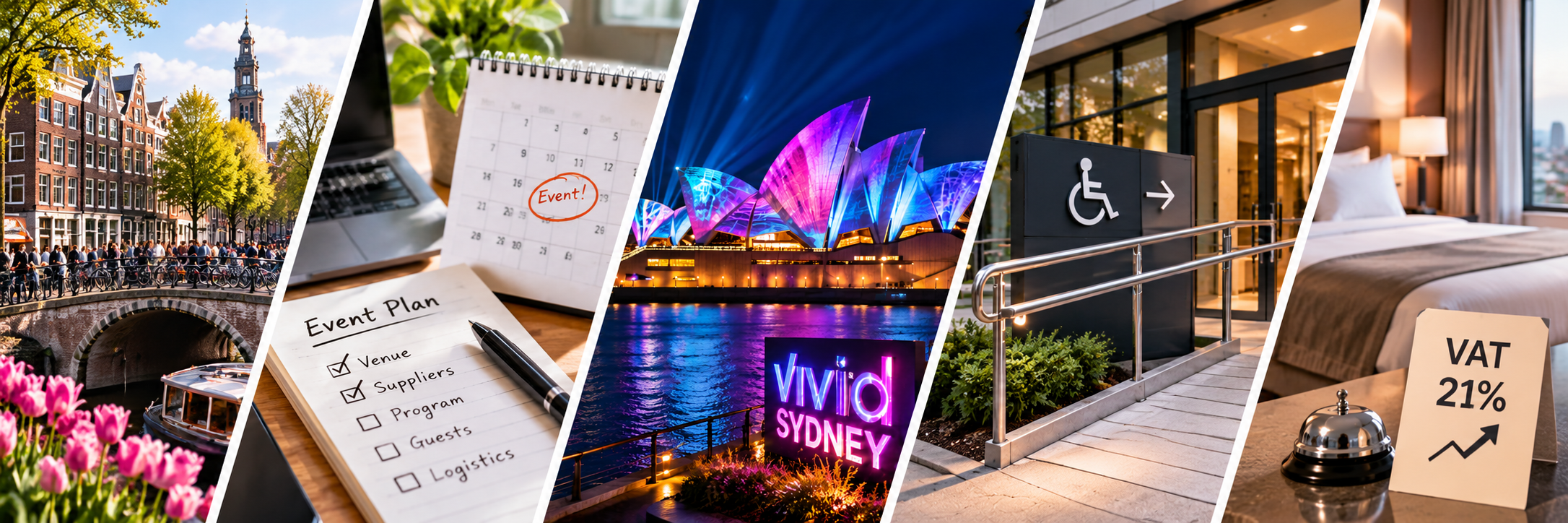
    Example: Amsterdam has introduced a tourist tax of 12.5% of the accommodation price.

  • 02 · Shorter Lead Times

    What is happening?

    Many business events are being planned closer to their actual dates. Research from 2025 showed that around one-third of venues were booked within three months of an event.

    Why does it matter?

    DMCs need to prepare proposals quickly, communicate clearly with clients and work with flexible suppliers. Backup plans are becoming more important.

    Example: A client may contact a DMC only a few months before a conference, leaving less time to arrange transport, venues and activities.

  • 03 · Year-Round Destinations

    What is happening?

    Destinations are developing activities throughout the year instead of focusing only on the busiest tourist seasons. Festivals, conferences and cultural events can attract visitors during quieter months.

    Why does it matter?

    City marketing organisations can spread tourism across different seasons and support local businesses throughout the year.

    Example: Vivid Sydney is a winter festival that attracts visitors during a traditionally quieter period.

  • 04 · Accessibility & Inclusivity

    What is happening?

    Destinations and event organisers are paying more attention to making events accessible to people with different needs, including people with disabilities.

    Why does it matter?

    City marketing organisations should provide clear accessibility information. DMCs should select suitable venues, transport and facilities so that more people can participate.

    Example: A conference venue with wheelchair access, accessible toilets and clear information before arrival.

  • 05 · Higher VAT on Overnight Stays

    What is happening?

    In the Netherlands, VAT on overnight accommodation increased from 9% to 21% in 2026. This makes hotel stays more expensive for business travellers and event participants.

    Why does it matter?

    Higher accommodation costs can influence event budgets and destination choices. DMCs may need to find more affordable options, while city marketing organisations must remain competitive.

    Example: A hotel room costing €100 before VAT costs €121 with 21% VAT, compared with €109 under the previous rate.

What do these trends tell us?

Business events are becoming more flexible, inclusive and focused on long-term value. City marketing organisations need to balance visitor growth with local needs, while DMCs must adapt to changing client expectations, planning times and costs.