Process of an event
What does this mean for city marketing organisations and DMC’S?
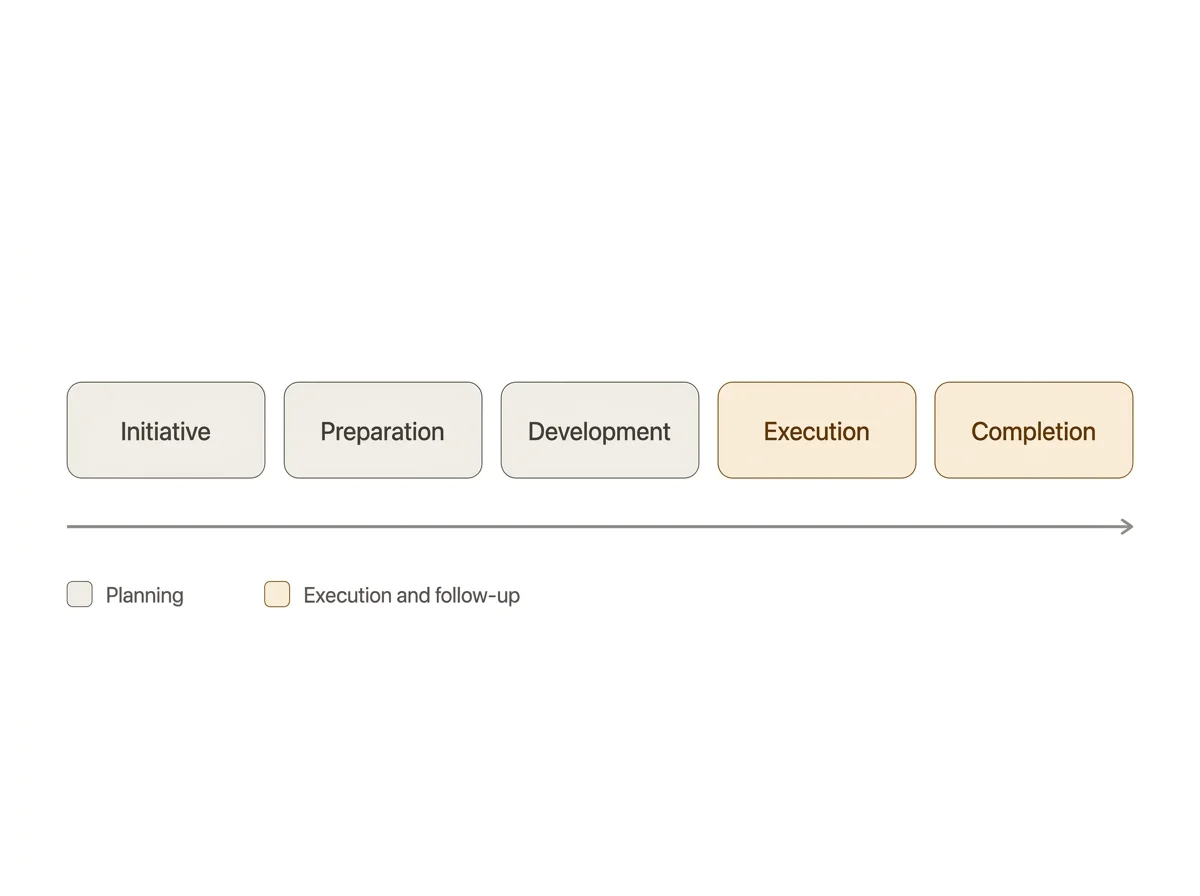
The process is described with the project phases theory of Verhaar, from an organisational point of view: initiative, preparation, development, execution, and completion and evaluation. For each phase we analyse where city marketing organisations and DMCs come into play.
Results of research
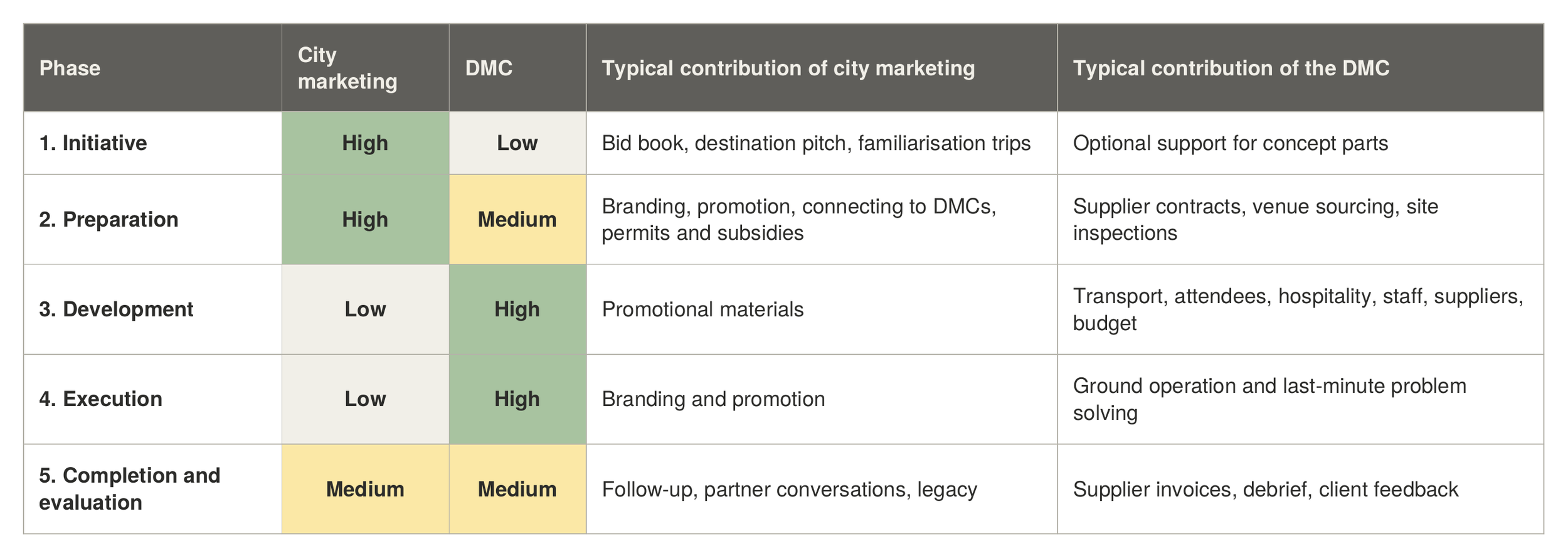
City marketing organisations act at the front of the process: they help to win the event, align it with the city’s brand and connect the organiser with the local network, including DMCs.DMCs act at the back and in the middle: from the moment the concept is approved they contract suppliers, plan logistics and run the operation on site.The two overlap in the preparation phase, where the city marketing organisation hands the organiser over to a DMC. Organisers can therefore leave the operation to the DMC and concentrate on content.
Desk research
Initiation: projects start from an assignment or an inquiry. For public organisations the municipality sets the assignment and goals; other clients are checked for fit with the city’s values. For the DMC and the convention bureau, an inquiry by a client or organiser starts the process. The first step is always to clarify objectives, audience, group size, dates, budget and needs.
Strategy and concept: strategy is anchored in a clear objective and a consistent brand story (Breda’s green, hospitable and boundless values; Brainport’s technology and innovation). Networking and connection run through the concept in public organisations. The DMC is the least standardised: each project manager works with clients in their own way.
Event process: the sequence is similar everywhere: define the assignment and budget, choose location and theme, plan, run on site, close and evaluate. City marketing often stays on the branding side and leaves logistics to organisers, whereas the DMC handles the whole chain, supported by tools such as its Andromeda proposal system and a master Excel file.
Evaluation: real but mostly informal and relationship-based (follow-up emails, calls, surveys, visitor and online data, partner conversations). Breda is the most data-driven; the DMC relies on client reactions and a debrief with a manager. The purpose is learning and keeping relationships alive, because follow-up can lead to future business.
Field research
Theory and interviews describe the same pattern. The table below summarises how involved each type of organisation is per phase. The ratings are our synthesis of the sources above.